Why Is Your Antivirus Scan Not Working? Complete Troubleshooting Guide
Introduction
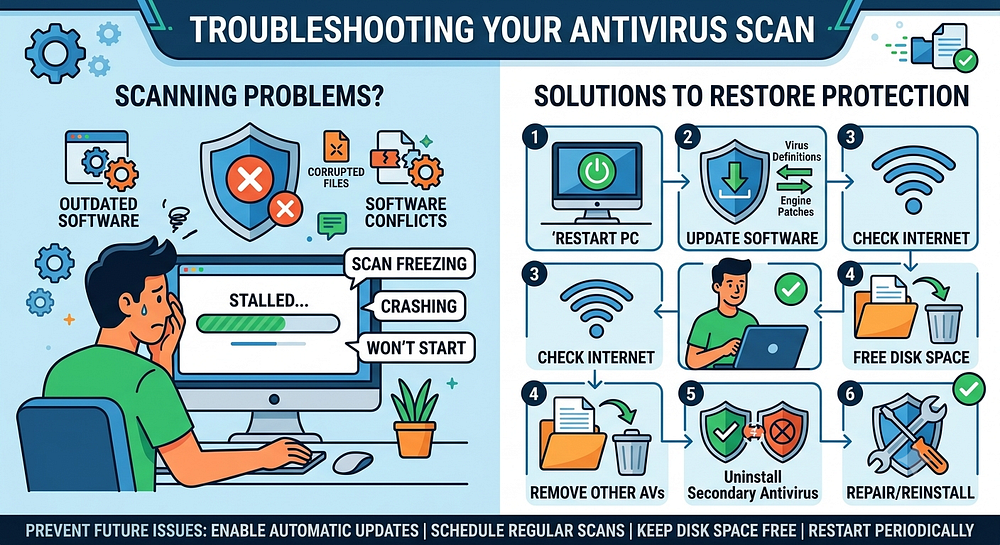
Antivirus software plays a vital role in protecting computers from viruses, ransomware, spyware, and other online threats. Regular system scans help identify malicious files before they can damage important data or compromise personal information. However, users sometimes encounter situations where their antivirus scan refuses to start, freezes during the scanning process, crashes unexpectedly, or never completes. These issues can leave your device vulnerable and create concerns about whether your system is properly protected.
A non-functioning antivirus scan does not always indicate a virus infection. In many cases, the problem is caused by outdated software, corrupted program files, insufficient storage space, conflicts with other security applications, or operating system errors. Fortunately, most scanning problems can be resolved with a few straightforward troubleshooting steps. Microsoft and major antivirus vendors recommend keeping security software updated, ensuring adequate disk space, and avoiding conflicts with multiple antivirus programs.
This guide explains the common reasons why an antivirus scan may stop working and provides practical solutions to restore normal scanning functionality.
Common Reasons an Antivirus Scan Stops Working
Several issues can prevent an antivirus program from scanning your computer successfully. Understanding these causes makes troubleshooting much easier.
Outdated Antivirus Software
Antivirus applications rely on the latest virus definitions to detect new threats. If the software has not been updated recently, the scan may fail or produce unexpected errors.
Corrupted Program Files
Unexpected shutdowns, failed updates, or incomplete installations can damage antivirus files and prevent scans from launching properly.
Insufficient Storage Space
Many antivirus applications require temporary storage during scanning and quarantine operations. Low disk space can interrupt or stop scans before they finish.
Multiple Security Programs
Running two antivirus applications simultaneously often creates software conflicts. Each program may interfere with the other's scanning engine.
Malware Interference
Some advanced malware attempts to disable security software or prevent antivirus scans from completing successfully.
Operating System Problems
Corrupted Windows system files or missing updates can also interfere with antivirus performance.
Signs Your Antivirus Is Not Working Properly
If you notice any of the following symptoms, your antivirus may require troubleshooting:
Scan never starts
Progress bar freezes
Program crashes during scanning
High CPU usage without completing the scan
Error messages during scanning
Unable to update virus definitions
Real-time protection repeatedly turns off
Security dashboard becomes unresponsive
Recognizing these symptoms early helps prevent potential security risks.
How to Fix an Antivirus Scan That Is Not Working
1. Restart Your Computer
Many temporary software conflicts disappear after restarting Windows. Reboot your computer before attempting more advanced troubleshooting.
2. Update Your Antivirus
Open your antivirus program and install all available updates, including:
Virus definition updates
Engine updates
Software patches
Updated software improves compatibility and resolves many scanning issues.
3. Verify Internet Connectivity
Most antivirus products require internet access to download the latest threat definitions and communicate with cloud-based protection services.
Check that:
Your Wi-Fi or Ethernet connection is stable.
Firewall settings are not blocking antivirus communication.
VPN software is not causing connection issues.
4. Free Up Disk Space
Low storage space can interrupt malware scans.
You can free space by:
Deleting temporary files
Emptying the Recycle Bin
Removing unused applications
Moving large files to external storage
After creating additional free space, restart the scan.
5. Close Background Applications
Heavy applications consume CPU and memory resources that antivirus software also requires.
Close unnecessary programs before running:
Video editing software
Games
Large downloads
Virtual machines
Browser tabs you no longer need
6. Check for Windows Updates
Operating system updates often include security improvements and bug fixes that help antivirus software function correctly.
Install all pending Windows updates before trying another scan.
7. Remove Other Antivirus Programs
Using multiple antivirus applications simultaneously can cause scanning conflicts.
If another security suite is installed:
Uninstall the unused antivirus.
Restart your PC.
Run the scan again.
Keeping only one real-time antivirus solution is generally recommended.
8. Repair or Reinstall the Antivirus
Most antivirus products include a repair feature.
If repairing does not solve the issue:
Uninstall the software.
Restart the computer.
Download the latest installer from the official vendor.
Install the newest version.
Update the software.
Run a complete scan.
Reinstallation often fixes corrupted program files.
Scan in Safe Mode
If malware is actively blocking antivirus scans, Safe Mode may help.
Safe Mode starts Windows with minimal drivers and background services, reducing interference.
After entering Safe Mode:
Update your antivirus if possible.
Run a Full Scan.
Remove detected threats.
Restart normally.
Many support communities recommend Safe Mode when malware prevents normal scanning.
Additional Troubleshooting Tips
If scanning problems continue, try these steps:
Run the built-in system file checker (SFC).
Check your hard drive for errors.
Review antivirus logs for specific error messages.
Temporarily disable unnecessary startup applications.
Restore Windows to an earlier restore point if the issue began recently.
Verify that your antivirus subscription is still active.
Prevent Future Antivirus Scan Problems
Good maintenance habits reduce the likelihood of future scanning issues.
Follow these best practices:
Enable automatic updates.
Schedule weekly full system scans.
Perform quick scans regularly.
Avoid downloading software from unknown websites.
Install Windows updates promptly.
Keep sufficient free disk space.
Remove unused security software.
Restart your computer periodically.
These habits help maintain reliable malware protection.
When Should You Contact Support?
If none of the troubleshooting steps resolve the issue, contact your antivirus provider if:
The scan always crashes at the same point.
Updates consistently fail.
Real-time protection remains disabled.
Error codes continue appearing.
Malware is suspected but cannot be removed.
The software repeatedly closes unexpectedly.
Support technicians can analyze logs and recommend advanced repair procedures.
Conclusion
An antivirus scan that refuses to run can expose your computer to unnecessary security risks, but the problem is often easier to resolve than it first appears. Updating the antivirus, installing Windows updates, freeing disk space, removing conflicting security software, and repairing or reinstalling the application solve many common issues. If malware is preventing scans, using Safe Mode or a rescue scan may help restore protection. By keeping your security software current and performing regular maintenance, you can ensure your antivirus remains ready to detect and remove threats whenever they appear.


Comments
Post a Comment