How to Install Antivirus Software Correctly?
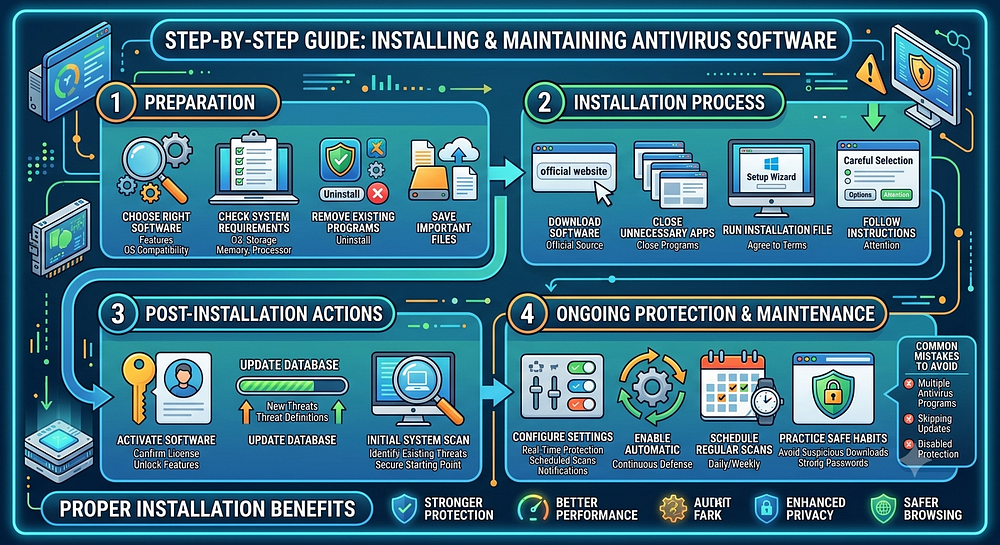
In today's digital world, protecting your computer from online threats is more important than ever. Viruses, malware, ransomware, spyware, and other cyber threats can compromise your personal information, slow down your system, and even cause permanent data loss. One of the most effective ways to protect your device is by installing reliable antivirus software correctly.
While installing antivirus software may seem like a simple task, many users make mistakes during the setup process that can reduce the effectiveness of the protection. Improper installation, outdated software, conflicting security programs, and skipped updates can leave your system vulnerable to threats.
Why Antivirus Software Is Important
Antivirus software acts as a security layer between your device and potential threats. It continuously monitors your system and helps detect, block, and remove malicious programs before they can cause harm.
Some key benefits of antivirus software include:
Protection against malware.
Defense against viruses.
Detection of suspicious activities.
Protection of personal information.
Improved system security.
Safer internet browsing.
Reduced risk of data theft.
Proper installation ensures that these protections work as intended.
Choose the Right Antivirus Software
Before beginning the installation process, it is important to select antivirus software that meets your needs.
Consider factors such as:
Compatibility with your operating system.
Security features.
Ease of use.
Update frequency.
System performance impact.
Reputation of the software provider.
Choosing trusted antivirus software provides a strong foundation for device security.
Check System Requirements
Every antivirus program has specific system requirements.
Before installation, verify that your device meets the necessary requirements for:
Operating system compatibility.
Available storage space.
Memory capacity.
Processor requirements.
Installing software on an unsupported system may lead to performance issues or installation failures.
Remove Existing Antivirus Programs
One of the most common installation mistakes is running multiple antivirus programs simultaneously.
Having more than one antivirus solution can cause:
Software conflicts.
Reduced performance.
False alerts.
System instability.
Before installing new antivirus software, remove any previous antivirus applications that are no longer needed.
Save Important Files
Although antivirus installation is generally safe, it is always wise to back up important documents and files before making major software changes.
Creating backups provides additional peace of mind and protects valuable data.
Download the Antivirus Software
Obtain the antivirus installation file from the official provider source.
Using trusted sources helps ensure that the software is authentic and free from modifications that could compromise security.
Avoid downloading security software from unknown locations.
Close Unnecessary Applications
Before starting the installation process, close programs that are currently running.
This helps:
Free system resources.
Reduce installation conflicts.
Improve installation speed.
Prevent interruptions.
A clean installation environment often produces better results.
Run the Installation File
Launch the antivirus installation program and follow the on-screen instructions.
Most installation processes include:
Accepting license terms.
Selecting installation preferences.
Choosing installation locations.
Configuring initial settings.
Read each step carefully before proceeding.
Follow Installation Instructions Carefully
Many users rush through software installations without reviewing the available options.
Take time to:
Read setup information.
Review selected settings.
Understand security options.
Confirm installation preferences.
Careful attention during setup helps ensure optimal protection.
Activate the Antivirus Software
Some antivirus products require activation after installation.
Activation typically confirms your license and enables access to all available features.
Without activation, certain protection functions may remain unavailable.
Completing this step is essential for full security coverage.
Update the Antivirus Database
After installation, update the antivirus software immediately.
Security updates provide:
New threat definitions.
Improved detection capabilities.
Security enhancements.
Bug fixes.
An updated antivirus database helps protect against the latest threats.
Perform an Initial System Scan
Running a complete system scan after installation is a good practice.
This scan helps:
Identify existing threats.
Detect suspicious files.
Verify system integrity.
Establish a secure starting point.
Even newly installed systems can benefit from an initial security check.
Configure Security Settings
Most antivirus programs allow users to customize security settings.
Common options include:
Real-time protection.
Scheduled scanning.
Threat notifications.
Automatic updates.
Quarantine settings.
Reviewing and adjusting these settings can improve protection based on your needs.
Enable Automatic Updates
Cyber threats evolve constantly.
Automatic updates ensure that your antivirus software remains current without requiring manual intervention.
Keeping updates enabled helps maintain continuous protection against emerging threats.
Schedule Regular Scans
Regular scanning helps identify threats that may have bypassed initial defenses.
Scheduled scans contribute to:
Ongoing system monitoring.
Threat detection.
Improved security.
Early identification of suspicious files.
Routine scanning is an important component of a strong security strategy.
Common Installation Mistakes to Avoid
Many users unintentionally weaken their protection during installation.
Avoid these common mistakes:
Installing multiple antivirus programs.
Skipping software updates.
Ignoring activation requirements.
Disabling real-time protection.
Downloading software from untrusted sources.
Skipping the initial system scan.
Ignoring security notifications.
Avoiding these mistakes improves overall security effectiveness.
Benefits of Proper Antivirus Installation
Correct installation provides several advantages.
These include:
Stronger protection against threats.
Better system performance.
Reliable threat detection.
Improved privacy protection.
Reduced risk of malware infections.
Enhanced browsing security.
Proper setup ensures that all security features function as intended.
Tips for Maintaining Antivirus Protection
Installing antivirus software is only the beginning.
Helpful maintenance practices include:
Keep the software updated.
Review security alerts regularly.
Run scheduled scans.
Monitor system performance.
Avoid suspicious downloads.
Practice safe browsing habits.
Check security settings periodically.
Consistent maintenance helps maximize protection.
Understanding the Importance of Cybersecurity
Antivirus software is one part of a broader cybersecurity strategy.
Users should also:
Use strong passwords.
Protect sensitive information.
Avoid suspicious websites.
Be cautious with email attachments.
Keep operating systems updated.
Combining these habits with antivirus protection creates a stronger defense against cyber threats.
FAQs
Why is antivirus software important?
Antivirus software helps protect your computer from malware, viruses, ransomware, spyware, and other security threats.
Should I remove my old antivirus before installing a new one?
Yes. Running multiple antivirus programs can create conflicts and reduce overall performance.
Why should I update antivirus software after installation?
Updates provide the latest threat definitions, security improvements, and detection capabilities needed to protect against new threats.
What is the purpose of an initial system scan?
An initial scan helps identify existing threats, verify system security, and establish a clean starting point for ongoing protection.
Should automatic updates be enabled?
Yes. Automatic updates help ensure continuous protection against emerging security threats.
What should I do if the antivirus software does not install properly?
Review system requirements, check for conflicting software, restart your device, and seek additional help if installation issues continue.
Conclusion
Installing antivirus software correctly is one of the most important steps you can take to protect your computer from modern cyber threats. Proper installation involves choosing reliable software, removing conflicting programs, completing activation, updating threat definitions, and configuring security settings appropriately.

Comments
Post a Comment