What Are the Two Main Problems with Antivirus Software Subscriptions?
In today’s digital world, antivirus software has become an essential tool for protecting computers, smartphones, and other devices from malware, viruses, ransomware, and phishing attacks. Millions of users rely on antivirus programs to safeguard their personal information, financial data, and online activities. Most antivirus companies offer subscription-based services that provide continuous protection through regular updates and security improvements.
While subscriptions make it easier for users to receive the latest security features without purchasing a new product every year, they also come with certain challenges. Many customers enjoy the convenience of ongoing protection, but some users face difficulties that can lead to frustration or unexpected expenses. Among the various concerns associated with antivirus subscriptions, two major issues often stand out: automatic renewals that result in unexpected charges and recurring costs that can become expensive over time.
Understanding these concerns can help users make informed decisions about their antivirus plans and manage their subscriptions more effectively.
Understanding Antivirus Subscription Services
Unlike older versions of antivirus software that required a one-time purchase, modern security programs typically operate on a subscription model. Users pay monthly or yearly fees to maintain access to virus definitions, real-time protection, cloud-based security tools, and customer support.
Subscription services allow security companies to continually update their software to defend against new threats. Since cyber threats evolve constantly, ongoing updates are critical to maintaining effective protection. Antivirus providers therefore encourage customers to keep their subscriptions active so devices remain protected without interruption.
However, the convenience of continuous coverage can sometimes create challenges, especially when users are unaware of how renewal systems and pricing structures work.
Issue One: Automatic Renewals and Unexpected Charges
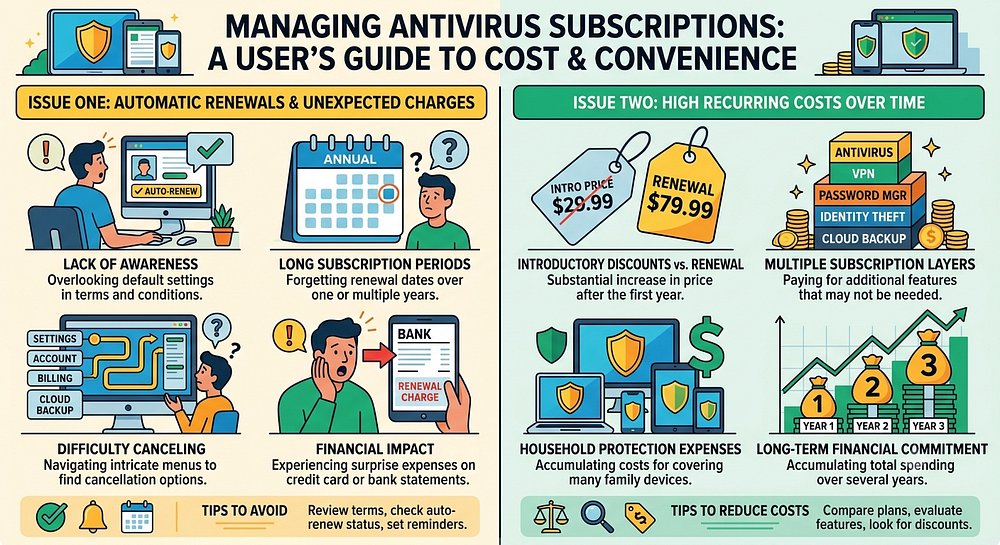
One of the most common problems users experience with antivirus subscriptions is automatic renewal. Many antivirus companies enable auto-renewal by default when a customer purchases a plan. This feature is designed to ensure uninterrupted protection by renewing the subscription before it expires.
Although automatic renewal can be helpful, it may also cause unexpected charges. Some users forget that they enrolled in a recurring subscription and only realize it after seeing a charge on their credit card or bank statement. This can be especially frustrating if they no longer use the software or have switched to a different security solution.
There are several reasons why automatic renewals become a concern:
Lack of Awareness
Many customers do not carefully review subscription terms during the purchase process. They may overlook the auto-renewal setting or assume that the subscription will simply expire at the end of the term.
Long Subscription Periods
Annual or multi-year subscriptions can make it easy to forget renewal dates. By the time the next billing cycle arrives, users may no longer remember signing up for recurring payments.
Multiple Devices or Accounts
Some individuals have several subscriptions linked to different devices or email addresses. Managing multiple accounts can become confusing, increasing the likelihood of unexpected renewals.
Difficulty Canceling Renewals
In some cases, users find it challenging to locate the settings required to disable automatic renewal. Navigating account dashboards, managing payment methods, or contacting customer support can take time and effort.
Financial Impact
Unexpected charges may create budgeting concerns, particularly if the renewal occurs during a financially difficult period. Customers may not appreciate a recurring payment they did not anticipate.
How Users Can Avoid Renewal Problems
Users can reduce the risk of unexpected charges by:
Reviewing subscription terms carefully before purchasing.
Checking whether auto-renewal is enabled.
Setting reminders before the renewal date.
Regularly reviewing account billing information.
Canceling automatic renewal if they prefer manual renewals.
Being proactive can help users maintain control over their subscriptions and avoid unwanted expenses.
Issue Two: High Recurring Costs Over Time
The second major concern with antivirus subscriptions is the ongoing expense associated with recurring payments. While the initial price of an antivirus plan may appear affordable, long-term costs can accumulate significantly.
Many antivirus companies offer attractive introductory discounts for new customers. These promotional rates can make subscriptions seem inexpensive during the first year. However, once the introductory period ends, renewal prices may increase substantially.
Introductory Discounts Versus Renewal Prices
A user might purchase a subscription at a discounted promotional rate and later discover that the regular renewal fee is considerably higher. This price difference can come as an unpleasant surprise.
Multiple Subscription Layers
Modern antivirus products often include additional features such as:
VPN services
Identity monitoring
Password managers
Cloud backup
Parental controls
Device optimization tools
While these features can provide added value, they may also increase subscription costs. Users who do not need all these extras may end up paying for services they rarely use.
Household Protection Expenses
Families with multiple devices often purchase plans that cover several computers, tablets, and smartphones. Although multi-device packages can be convenient, they may still represent a significant yearly expense.
Long-Term Financial Commitment
A recurring annual payment may not seem expensive at first, but over several years the total amount spent can become substantial. Some users eventually question whether the benefits justify the continuing cost.
Budget Management Challenges
Recurring subscriptions from multiple services—including streaming platforms, cloud storage, and antivirus software—can make it difficult to track overall spending. Antivirus fees become one more recurring expense that users must manage.
Ways to Reduce Antivirus Costs
Users can control expenses by:
Comparing plans before renewing.
Evaluating whether premium features are necessary.
Looking for seasonal discounts.
Choosing plans that match the number of devices they actually use.
Reviewing subscriptions annually to determine if continued coverage is needed.
Regularly assessing the value received from a subscription can help prevent unnecessary spending.
Balancing Protection and Cost
Despite these concerns, antivirus software continues to play an important role in digital security. Cyber threats remain widespread, and security software can help reduce the risk of malware infections, phishing attacks, and unauthorized access.
The key is finding the right balance between protection and affordability. Users should understand exactly what their subscription includes, how much it costs, and whether automatic renewal aligns with their preferences.
Taking time to review account settings, monitor renewal dates, and compare available plans can make subscription management much easier. Informed users are better equipped to avoid unexpected charges and ensure they receive value from their security software.
Conclusion
The two main issues with antivirus software subscriptions are automatic renewals that can lead to unexpected charges and recurring costs that may become expensive over time. While subscription-based security services provide continuous updates and ongoing protection, they also require users to pay close attention to billing practices and long-term costs.
By understanding how subscriptions work, reviewing renewal settings, and regularly evaluating the value of the service, users can enjoy the benefits of antivirus protection while avoiding common subscription frustrations. Staying informed is one of the best ways to maintain both digital security and financial control.


Comments
Post a Comment