How to Solve Common Antivirus Issues and Keep Your Device Protected
Introduction
Antivirus software is one of the most important tools for protecting computers, laptops, and other digital devices from malware, ransomware, spyware, phishing attacks, and other online threats. It continuously monitors your system, scans files, and blocks harmful programs before they can damage your data. However, like any software, antivirus programs can occasionally experience problems that affect their performance.
Users may notice that their antivirus is not updating, scans are taking too long, real-time protection is disabled, or the software is consuming excessive system resources. Sometimes antivirus programs even fail to detect threats or display unexpected error messages. These issues can reduce the effectiveness of your security software and leave your computer vulnerable to cyber threats.
The good news is that most antivirus problems are caused by software conflicts, outdated definitions, corrupted files, or incorrect settings. By understanding the common causes and following a few simple troubleshooting steps, you can restore your antivirus software and maintain strong protection for your device.
Why Antivirus Problems Occur
Several factors can interfere with the normal operation of antivirus software. Identifying the underlying cause is the first step toward resolving the issue.
Some of the most common causes include:
Outdated antivirus software
Expired subscription or license
Corrupted installation files
Poor internet connection
Windows update conflicts
Low system memory
Insufficient storage space
Malware attempting to disable security software
Running multiple antivirus programs simultaneously
Understanding these factors helps you choose the most effective solution.
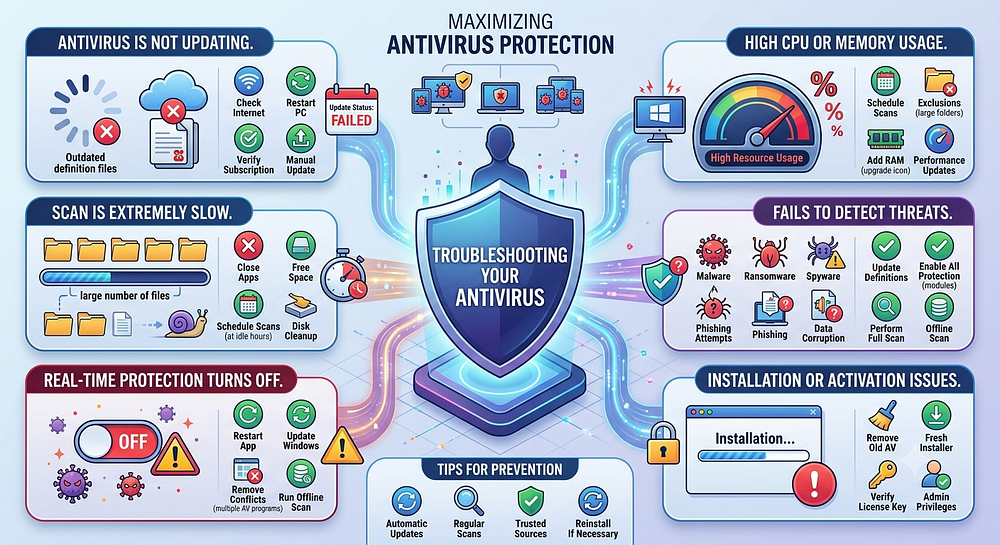
Antivirus Is Not Updating
One of the most common problems users face is the inability to download the latest virus definitions.
This issue may occur because of:
Internet connectivity problems
Firewall restrictions
Expired subscription
Server maintenance
Corrupted update files
How to Fix It
Check your internet connection.
Restart your computer.
Open the antivirus program and manually check for updates.
Verify that your subscription is active.
Install any available Windows updates.
Restart the update process.
Keeping virus definitions updated ensures your antivirus can recognize newly discovered threats.
Antivirus Scan Is Extremely Slow
A full system scan naturally takes longer than a quick scan, but if scanning becomes unusually slow, your system may have another issue.
Possible reasons include:
Large number of files
Low available RAM
Running several programs simultaneously
Fragmented hard drive (HDD)
Background applications consuming resources
Ways to Improve Scan Speed
Close unnecessary applications.
Restart the computer before scanning.
Free up storage space.
Schedule scans during idle hours.
Update the antivirus software.
Run periodic disk cleanup.
These steps often reduce scan time while maintaining effective protection.
Real-Time Protection Turns Off Automatically
Real-time protection continuously monitors your system for suspicious activity. If this feature keeps disabling itself, immediate troubleshooting is recommended.
Common causes include:
Software corruption
Conflicting security programs
Malware infection
Incomplete software updates
Windows security conflicts
Solutions
Restart the antivirus application.
Update both Windows and the antivirus software.
Remove any additional antivirus programs.
Perform an offline malware scan.
Repair or reinstall the antivirus application if necessary.
Real-time protection should remain enabled at all times for continuous security.
Antivirus Uses Too Much CPU or Memory
Some users notice their computer becoming slow whenever the antivirus runs.
High resource usage may occur because:
A full system scan is running.
Large compressed files are being scanned.
Background updates are installing.
System hardware is outdated.
Multiple security applications are active.
Reduce Resource Usage
Schedule scans outside working hours.
Close unnecessary background applications.
Exclude trusted large folders if appropriate.
Increase available system memory if possible.
Keep the antivirus updated with the latest performance improvements.
Optimizing your system helps maintain both security and performance.
Antivirus Fails to Detect Threats
No antivirus solution can guarantee detection of every threat, but outdated software or incorrect settings can reduce detection accuracy.
Possible reasons include:
Old virus definitions
Disabled protection modules
Excluded folders containing malware
Advanced zero-day threats
Incorrect scan configuration
Improve Detection
Enable all protection features.
Install the latest updates.
Perform a complete system scan.
Run periodic offline scans.
Avoid downloading software from unknown websites.
Maintaining current security settings greatly improves malware detection rates.
Installation or Activation Problems
Sometimes users cannot install or activate their antivirus software successfully.
Common causes include:
Previous antivirus remnants
Damaged installation files
Unsupported operating system
License activation errors
Temporary server issues
Troubleshooting Steps
Remove older antivirus software completely.
Restart the computer.
Download a fresh installer from the official website.
Verify your activation key.
Disable unnecessary background software during installation.
Complete installation with administrator privileges.
A clean installation often resolves activation and installation failures.
Error Messages During Antivirus Operation
Occasional error messages may appear while updating, scanning, or launching the antivirus program.
These errors may indicate:
Missing program files
Damaged Windows components
Update failures
Network interruptions
Configuration issues
Recommended Actions
Note the exact error code.
Restart the software.
Install pending updates.
Repair the antivirus installation.
Restart Windows.
Contact customer support if the error persists.
Recording the error code helps support teams diagnose the issue more quickly.
Tips to Prevent Future Antivirus Problems
Preventive maintenance helps keep your antivirus software functioning efficiently.
Follow these best practices:
Enable automatic updates.
Keep Windows updated.
Schedule regular system scans.
Avoid installing multiple antivirus programs.
Delete unnecessary files regularly.
Download software only from trusted sources.
Renew your subscription before it expires.
Restart your computer periodically.
Monitor security notifications promptly.
These habits improve both system performance and overall security.
When to Reinstall Your Antivirus
If problems continue despite troubleshooting, reinstalling the software may be the best solution.
Consider reinstalling when:
The program crashes repeatedly.
Updates always fail.
Real-time protection cannot be enabled.
Scans never complete.
The application refuses to open.
Error messages continue after repairs.
A fresh installation replaces damaged program files and restores default settings.
Conclusion
Antivirus software is your first line of defense against modern cyber threats, but occasional technical problems can reduce its effectiveness. Fortunately, issues such as failed updates, slow scans, disabled real-time protection, installation errors, and excessive resource usage can often be resolved with basic troubleshooting. Keeping your antivirus updated, maintaining your operating system, avoiding software conflicts, and performing regular maintenance will help ensure reliable protection. By addressing problems early and following good security practices, you can keep your devices running smoothly while staying protected from viruses, malware, and other online threats.


Comments
Post a Comment