How to Set Up Your HP Printer on Wi-Fi Using the WPS Method
- Get link
- X
- Other Apps
Introduction
Connecting an HP printer to a Wi-Fi network allows you to print wirelessly from your desktop, laptop, smartphone, or tablet without relying on USB cables. One of the fastest and easiest ways to establish a wireless connection is by using Wi-Fi Protected Setup (WPS). This feature is available on many HP printers and compatible wireless routers, enabling users to connect their devices securely with minimal configuration.
The WPS method is especially helpful for users who do not want to manually enter long Wi-Fi passwords during printer setup. Depending on your printer model and router, you can connect using either the WPS Push Button method or the WPS PIN method. Both options create a secure connection while simplifying the installation process.
This guide explains how to connect an HP printer to Wi-Fi using WPS, the requirements for a successful setup, common troubleshooting tips, and best practices to maintain a reliable wireless connection.
What Is WPS?
WPS stands for Wi-Fi Protected Setup, a wireless networking feature designed to make connecting devices to a Wi-Fi network easier.
Instead of manually entering your wireless password, WPS establishes a secure connection automatically. Most modern HP printers and wireless routers support this feature, making it one of the quickest methods for completing wireless printer installation.
There are two primary WPS connection methods:
- WPS Push Button
- WPS PIN
Both methods provide a secure wireless connection while reducing setup time.
Before You Begin
Before connecting your HP printer, ensure the following requirements are met:
- Your HP printer supports wireless networking.
- Your wireless router supports WPS.
- The printer is powered on.
- The router is functioning correctly.
- The printer is placed within range of the Wi-Fi signal.
- Your wireless network is active and stable.
- The printer firmware is updated.
- The latest HP printer driver is installed on your computer.
Preparing these items beforehand helps prevent setup interruptions.
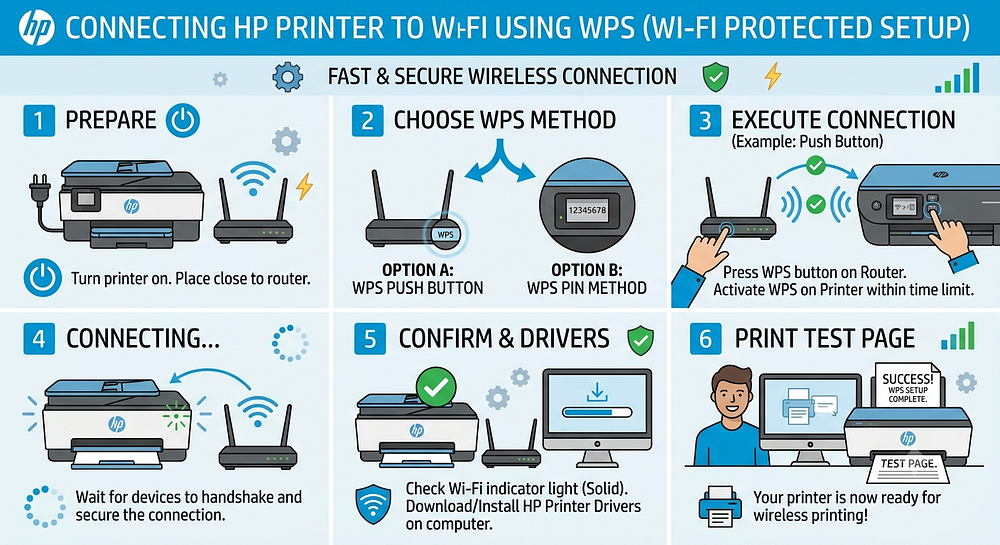
Method 1: Connect Using the WPS Push Button
The Push Button method is the simplest option for most users.
Step 1: Turn On the Printer
Power on the HP printer and wait until it finishes its startup process.
Step 2: Enable Wireless Mode
Open the printer's control panel and access the Wireless or Network settings.
Choose the option to begin wireless setup.
Step 3: Press the WPS Button
Locate the WPS button on your wireless router.
Press and hold it for a few seconds until the WPS indicator begins flashing.
Step 4: Start WPS on the Printer
Within two minutes of pressing the router button, start the WPS connection on the printer.
The printer searches for the router and automatically establishes a secure connection.
Step 5: Confirm the Connection
When the wireless indicator becomes steady, the connection is complete.
You can now print wirelessly from your connected devices.
Method 2: Connect Using the WPS PIN
Some HP printers use a temporary WPS PIN instead of the Push Button method.
Step 1: Open Wireless Settings
Navigate to the printer's Wireless or Network menu.
Step 2: Select WPS PIN
Choose the WPS PIN connection option.
The printer generates a temporary PIN.
Step 3: Enter the PIN
Open your router's wireless configuration page if prompted and enter the displayed PIN.
Step 4: Wait for Connection
After verification, the printer connects automatically to the wireless network.
Since the PIN is temporary, complete the process before it expires.
Verify the Wireless Connection
Once setup is complete, verify that everything is working correctly.
Check the following:
- The wireless light remains solid.
- The printer appears in your computer's printer list.
- The printer is connected to the correct Wi-Fi network.
- No wireless error messages appear.
Finally, print a test page to confirm successful installation.
Common Problems During WPS Setup
Although WPS simplifies installation, users may occasionally experience issues.
Common problems include:
- WPS button timing out.
- Printer not detecting the router.
- Weak wireless signal.
- Router WPS feature disabled.
- Incorrect wireless settings.
- Outdated printer firmware.
- Old printer drivers.
- Temporary router communication errors.
- Interrupted setup process.
- Printer previously connected to another network.
Most of these problems can be resolved with a few basic troubleshooting steps.
Troubleshooting WPS Connection Issues
Restart the Printer
Turn off the printer.
Wait 30 seconds.
Turn it back on and restart the setup process.
Restart the Router
Power off the router for approximately one minute.
Restart it and allow the internet connection to stabilize.
Move the Printer Closer
Distance affects wireless performance.
Place the printer closer to the router while completing setup.
Check Router Compatibility
Not every router supports WPS.
Verify that the WPS feature is enabled within your router settings.
Update Printer Firmware
Firmware updates improve:
- Wireless performance
- Security
- Compatibility
- Reliability
Keeping firmware updated helps avoid many wireless issues.
Install the Latest Printer Driver
Updated printer drivers improve communication between your computer and printer.
They also resolve compatibility problems introduced by operating system updates.
Benefits of Using WPS
Using WPS offers several advantages.
Faster Installation
Wireless setup takes only a few minutes.
Secure Connection
WPS creates an encrypted connection between your printer and router.
No Need to Enter Passwords
Users do not need to manually type complex Wi-Fi passwords.
Reduced Setup Errors
Automatic configuration minimizes typing mistakes.
Convenient Wireless Printing
Once connected, multiple devices on the network can print without additional configuration.
Tips for Maintaining a Stable Wireless Connection
After connecting your HP printer, follow these best practices:
- Keep printer firmware updated.
- Install the latest printer drivers.
- Restart the printer occasionally.
- Avoid placing the printer too far from the router.
- Ensure your router firmware remains updated.
- Keep your Wi-Fi network secure.
- Print a test page after major updates.
- Reconnect the printer if you replace your router or change Wi-Fi settings.
These habits help ensure long-term wireless performance.
Frequently Asked Questions
What is the fastest way to connect an HP printer to Wi-Fi?
The WPS Push Button method is usually the quickest way if both your printer and router support it.
What is the difference between WPS Push Button and WPS PIN?
The Push Button method connects automatically after pressing the router's WPS button, while the PIN method requires entering a temporary security code generated by the printer.
Does every HP printer support WPS?
No. Support varies depending on the printer model. Check your printer's specifications or user guide to confirm compatibility.
Why won't my HP printer connect using WPS?
Possible causes include disabled WPS on the router, weak Wi-Fi signal, outdated firmware, incorrect network settings, or temporary communication issues.
Is WPS secure?
Yes. WPS provides a secure way to establish a wireless connection, although many users prefer standard Wi-Fi setup if WPS is unavailable.
Should I install printer drivers after connecting?
Yes. Installing the latest printer drivers improves compatibility, reliability, and overall printing performance.
Conclusion
Using the WPS method is one of the simplest ways to connect an HP printer to a wireless network. Whether you choose the Push Button option or the WPS PIN method, the process is designed to establish a secure connection quickly without requiring you to manually enter your Wi-Fi password. Preparing your printer and router, verifying compatibility, and following the recommended setup steps can make installation smooth and hassle-free.
If you encounter connection issues, restarting your devices, checking your wireless settings, updating the printer firmware, and installing the latest printer driver can resolve many common problems. Once connected successfully, your HP printer will be ready to deliver reliable wireless printing for all compatible devices on your network, making everyday printing more convenient and efficient.
- Get link
- X
- Other Apps


Comments
Post a Comment