How to Reconnect Your Printer to Wi-Fi: A Complete Setup and Troubleshooting Guide
Introduction
Wireless printers have become an essential part of both home and office environments, allowing users to print documents from computers, smartphones, and tablets without the need for physical cables. A stable Wi-Fi connection makes printing more convenient, especially when multiple users share the same printer. However, after changing your wireless router, updating the network password, moving the printer to a new location, or experiencing internet issues, your printer may disconnect from the Wi-Fi network.
When this happens, the printer may appear offline, fail to receive print jobs, or become invisible to connected devices. Fortunately, reconnecting a printer to a wireless network is usually a straightforward process. Whether your printer includes a touchscreen display or uses a setup button, most manufacturers provide simple methods to restore the connection.
This guide explains why printers lose their Wi-Fi connection, how to reset the wireless settings, reconnect the printer to your network, and prevent future connectivity issues.
Why Does a Printer Disconnect from Wi-Fi?
There are several reasons why a wireless printer may lose its network connection.
Some of the most common causes include:
Changing the Wi-Fi network name (SSID)
Updating the wireless password
Replacing or resetting the router
Weak wireless signal
Incorrect network settings
Outdated printer firmware
Temporary router issues
Printer software configuration problems
Understanding the cause makes it much easier to reconnect the printer successfully.
Signs Your Printer Needs a Wi-Fi Reset
A disconnected printer usually displays one or more of these symptoms:
Printer status shows Offline
Print jobs remain in the queue
Computer cannot detect the printer
Wireless indicator light keeps blinking
Mobile printing stops working
Printer displays a network connection error
Unable to scan over the network
These signs generally indicate that the printer is no longer connected to your wireless network.
Prepare Before Resetting the Wi-Fi Connection
Before reconnecting your printer, make sure you have the following information ready:
Your Wi-Fi network name (SSID)
Wireless password
Stable internet connection
Printer powered on
Router working properly
Computer or smartphone connected to the same Wi-Fi network
Having this information available makes the setup process much smoother.
Method 1: Reset Wireless Settings from the Printer
Many modern printers include a built-in option to restore network settings.
General steps include:
Turn on the printer.
Open the printer's Settings or Network menu.
Locate Network Settings or Wireless Settings.
Choose Reset Network Settings or Restore Wi-Fi Defaults.
Confirm the reset.
Wait for the printer to restart.
After the reset, the printer forgets the previous wireless network and is ready to connect to a new one.
Method 2: Connect Using the Printer Display
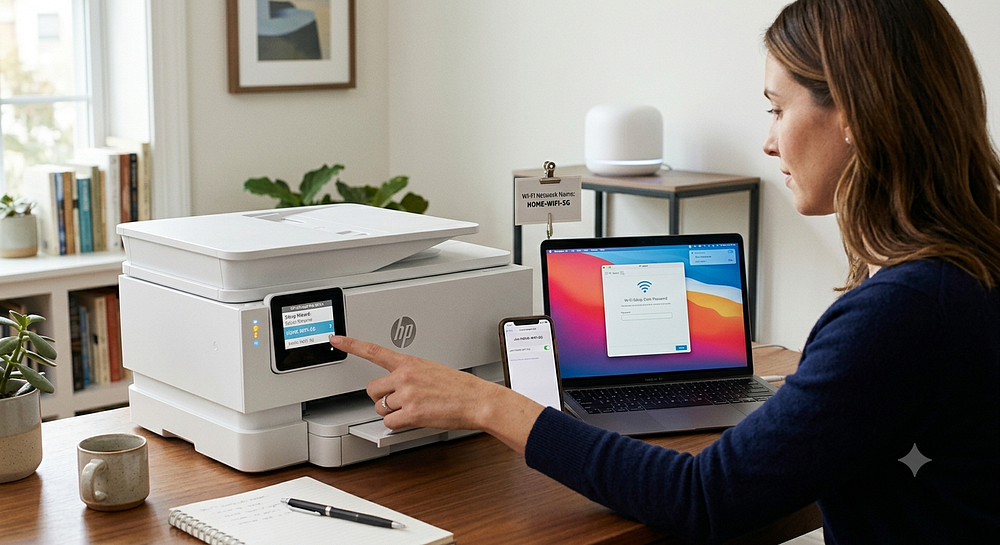
If your printer has a touchscreen, reconnecting to Wi-Fi is usually very simple.
Follow these steps:
Open the Wireless or Network menu.
Select Wireless Setup Wizard.
Wait while the printer searches for nearby networks.
Choose your Wi-Fi network.
Enter the wireless password carefully.
Confirm the connection.
Wait until the wireless light becomes steady.
Once connected, print a network configuration page to verify the connection.
Method 3: Use the WPS Button
Many wireless routers support Wi-Fi Protected Setup (WPS), allowing devices to connect without manually entering the password.
General procedure:
Turn on the printer.
Press the printer's Wireless or WPS button.
Within two minutes, press the WPS button on the router.
Wait while both devices establish the connection.
Verify that the wireless indicator becomes solid.
This method works only if both the printer and router support WPS.
Method 4: Connect Using Printer Software
Most printer manufacturers provide setup software that automatically detects and configures the printer.
The software typically allows you to:
Locate nearby printers
Configure wireless settings
Install drivers
Update firmware
Test the printer connection
Using the official setup utility is often the easiest option for first-time installation.
Troubleshooting Wi-Fi Connection Problems
If your printer still refuses to connect, try the following solutions.
Restart Both Devices
Turn off both the printer and router.
Wait about one minute before turning them back on.
Many temporary connection problems disappear after a simple restart.
Move the Printer Closer to the Router
Weak Wi-Fi signals often cause unstable connections.
Avoid placing the printer:
Behind thick walls
Near microwave ovens
Close to cordless phones
Inside enclosed cabinets
A stronger signal improves wireless stability.
Verify the Correct Password
A single incorrect character in the Wi-Fi password prevents successful connection.
Double-check:
Uppercase letters
Lowercase letters
Numbers
Special symbols
Enter the password carefully before reconnecting.
Update Printer Firmware
Outdated firmware may create compatibility issues with newer routers.
Install the latest firmware available for your printer model to improve wireless performance, stability, and security.
Restart the Print Spooler
If the printer connects successfully but still does not print, restarting the print spooler service on your computer may resolve the issue.
This clears stuck print jobs and refreshes communication between the computer and printer.
Tips for Maintaining a Stable Wireless Connection
Once your printer reconnects successfully, these practices can help maintain reliable performance.
Follow these recommendations:
Keep the printer within good Wi-Fi range.
Update firmware regularly.
Avoid changing the Wi-Fi network name frequently.
Use a secure wireless password.
Restart the router occasionally.
Install updated printer drivers.
Remove duplicate printer entries from your computer.
Keep your operating system updated.
Regular maintenance minimizes future connectivity issues.
When Should You Reset the Printer Again?
A wireless reset may become necessary if:
You purchase a new router.
You change the Wi-Fi password.
You move to another location.
The printer repeatedly disconnects.
Network settings become corrupted.
The printer cannot locate your wireless network.
Resetting the network settings allows the printer to establish a fresh wireless connection.
Conclusion
A printer that loses its Wi-Fi connection can interrupt work and create unnecessary frustration, but reconnecting it is usually a quick and manageable task. Whether you reset the network settings, use the Wireless Setup Wizard, connect through WPS, or install the printer using official setup software, most wireless issues can be resolved within a few minutes. By keeping your printer firmware updated, maintaining a strong Wi-Fi signal, and ensuring accurate network settings, you can enjoy reliable wireless printing for everyday home or office use.


Comments
Post a Comment