How to Properly Install Antivirus Software for Complete Device Protection
Introduction
Installing antivirus software is one of the most important steps in protecting your computer from modern cyber threats. Every day, devices are exposed to risks such as viruses, malware, ransomware, spyware, phishing attacks, and other forms of malicious software that can compromise personal information and system performance. However, simply downloading an antivirus program is not enough. Proper installation ensures that the software functions as intended, provides real-time protection, and keeps your device secure from emerging threats.
Many users make common mistakes during the installation process, such as installing multiple antivirus programs, ignoring software updates, or skipping important setup options. These mistakes can reduce the effectiveness of the antivirus and may even create conflicts that slow down the computer. Understanding the correct installation process helps ensure maximum protection while maintaining system performance.
Whether you are installing antivirus software on a new computer or replacing an existing security solution, following the right steps can make a significant difference. This guide explains how to install antivirus software correctly, avoid common installation mistakes, configure essential settings, and maintain long-term protection for your devices.
Why Proper Antivirus Installation Matters
Antivirus software serves as the first line of defense against cyber threats. A proper installation allows the software to detect malicious files, monitor suspicious activity, and provide real-time protection while you browse the internet, download files, or use email.
Correct installation also ensures that important security components are enabled automatically. Features such as firewall integration, ransomware protection, phishing detection, scheduled scans, and automatic updates work together to provide comprehensive protection.
Improper installation may leave security gaps that attackers can exploit. For example, installing two antivirus programs simultaneously may cause software conflicts, reduce system performance, or disable critical security features. Likewise, failing to update virus definitions after installation can prevent the antivirus from detecting newly discovered threats.
Taking a few extra minutes during installation helps ensure that the software operates efficiently and provides the highest level of protection available.
Preparing Your Device Before Installation
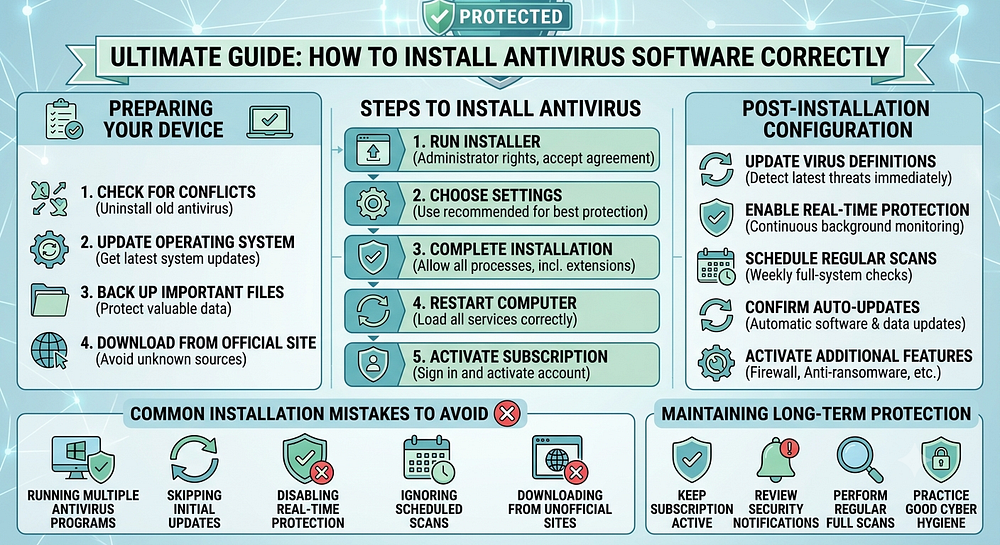
Before installing antivirus software, it is important to prepare your computer properly. Begin by checking whether another antivirus program is already installed. Running multiple antivirus applications at the same time can create conflicts and reduce overall effectiveness. If another antivirus solution is present, uninstall it completely before proceeding.
Next, ensure that your operating system is up to date. Installing the latest system updates improves compatibility and allows the antivirus software to integrate properly with your device.
It is also a good idea to back up important files before making significant software changes. Although antivirus installation is generally safe, maintaining a backup protects valuable documents, photos, and other personal data.
Finally, download the antivirus installer only from the official website of the software provider. Avoid downloading installation files from unknown or unofficial sources, as these may contain modified or malicious software.
Steps to Install Antivirus Software Correctly
Installing antivirus software correctly involves more than simply clicking the install button. Following each step carefully helps ensure complete protection.
Start by downloading the latest version of the antivirus installer from the official source. Once the download is complete, locate the installation file and run it using administrator privileges if required.
Read the installation prompts carefully and accept the license agreement after reviewing it. During installation, choose the recommended settings unless you have specific configuration requirements.
Allow the installer to complete all required processes without interruption. Some antivirus programs may install additional security components such as browser protection, firewall extensions, or anti-phishing tools. These features contribute to better overall security.
After installation finishes, restart your computer if prompted. Restarting ensures that all security services load correctly and begin monitoring your system immediately.
Once the computer restarts, sign in to your antivirus account if required and activate your subscription using the appropriate activation method.
Configure Security Settings After Installation
After the antivirus software has been installed successfully, configuring the settings is essential for maintaining continuous protection.
Begin by updating the virus definitions immediately. Antivirus programs rely on updated threat databases to identify the latest malware and online threats.
Enable real-time protection so the software continuously monitors files, applications, and internet activity. This feature helps detect threats before they can infect your device.
Schedule automatic system scans at convenient times, such as weekly or during periods when the computer is not heavily used. Regular scans help identify hidden threats that may have entered the system.
Verify that automatic software updates are enabled. Frequent updates ensure that the antivirus receives the latest security improvements, bug fixes, and malware detection capabilities.
If your antivirus includes firewall management, ransomware protection, phishing detection, or web browsing security, confirm that these features are activated for maximum protection.
Common Installation Mistakes to Avoid
Many users unknowingly reduce their security by making simple installation mistakes. One of the most common errors is installing more than one antivirus program at the same time. Multiple security programs often interfere with one another, causing slow performance and incomplete protection.
Another mistake is skipping software updates immediately after installation. Even newly downloaded antivirus software may require updated virus definitions before providing effective protection.
Some users disable real-time protection because they believe it slows down the computer. While system performance is important, disabling continuous protection significantly increases security risks.
Ignoring scheduled scans is another common issue. Although real-time protection blocks many threats, regular full-system scans provide an additional layer of security.
Finally, downloading antivirus software from unofficial websites increases the risk of installing counterfeit or malicious applications. Always obtain software directly from the official provider.
Maintaining Long-Term Antivirus Protection
Installing antivirus software is only the beginning of protecting your device. Ongoing maintenance helps ensure continued effectiveness against evolving cyber threats.
Keep your antivirus subscription active so you continue receiving software updates and virus definition updates. Expired subscriptions may limit protection or disable certain features.
Regularly review security notifications generated by the antivirus. These alerts can identify blocked threats, outdated software, or recommended security improvements.
Perform full system scans periodically even if real-time protection is enabled. This practice helps detect dormant malware or hidden threats that may not have been identified during routine monitoring.
Maintain good cybersecurity habits by avoiding suspicious email attachments, downloading files only from trusted sources, using strong passwords, and keeping your operating system updated.
Combining responsible online behavior with properly installed antivirus software creates a strong defense against modern cyber threats.
Conclusion
Proper antivirus installation is an essential step in maintaining the security and performance of your computer. By preparing your device, installing the software correctly, enabling important security features, and keeping the program updated, you can significantly reduce the risk of malware infections and other cyber threats.
Avoiding common installation mistakes, scheduling regular scans, and maintaining your antivirus software over time helps ensure consistent protection for your personal information and digital activities. A properly installed antivirus solution, combined with safe online practices, provides a reliable foundation for long-term cybersecurity and greater peace of mind while using your devices.


Comments
Post a Comment