How Can You Fix Common Email Server Connection Errors?
Introduction
Email has become an essential part of everyday communication for individuals, businesses, educational institutions, and organizations. Whether you are sending important work documents, communicating with clients, or managing personal correspondence, a stable email connection is crucial. However, many users occasionally encounter email server connection errors that prevent them from sending, receiving, or synchronizing emails.
Email server connection issues can occur for various reasons, including incorrect account settings, unstable internet connections, outdated email applications, authentication problems, or temporary server outages. While these errors can seem frustrating, they are often temporary and can be resolved through basic troubleshooting.
This guide explains the most common causes of email server connection errors, practical solutions to restore email functionality, and preventive measures that help maintain a reliable email experience.
What Are Email Server Connection Errors?
An email server connection error occurs when your email application cannot successfully communicate with the mail server responsible for sending or receiving messages.
This may affect various email services and clients, including desktop applications, webmail platforms, and mobile devices.
Common symptoms include:
Emails failing to send
New messages not arriving
Continuous synchronization failures
Authentication errors
Login failures
Timeout messages
Server unavailable notifications
Repeated password requests
Understanding these symptoms makes troubleshooting much easier.
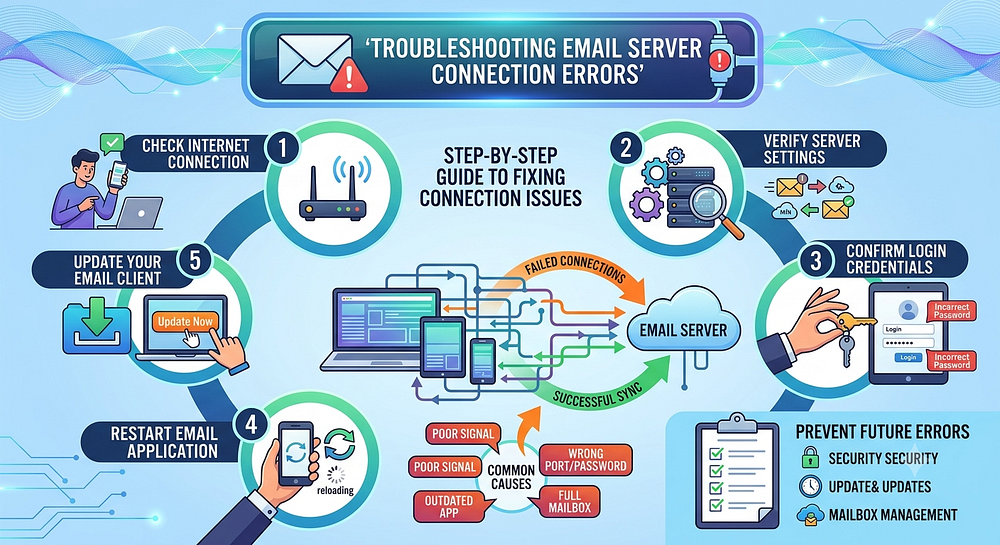
Common Causes of Email Server Connection Problems
Several factors can interrupt communication between your email application and the email server.
The most common causes include:
Poor internet connection
Incorrect incoming or outgoing server settings
Wrong email password
Outdated email application
Firewall or antivirus interference
Full mailbox storage
Temporary email server outages
Expired email account credentials
Corrupted email profile
SSL or encryption configuration issues
Fortunately, most of these problems can be resolved without advanced technical knowledge.
Check Your Internet Connection
A stable internet connection is the foundation of reliable email communication.
If your internet connection becomes weak or unstable, your email application may fail to connect to the server.
You can improve connectivity by:
Restarting your modem or router.
Testing other websites.
Switching to a stronger Wi-Fi signal.
Using a wired connection when possible.
Disconnecting and reconnecting to the network.
A reliable internet connection often resolves temporary connection issues.
Verify Your Email Server Settings
Incorrect server settings are among the leading causes of connection errors.
Your email application must use the correct:
Incoming mail server
Outgoing mail server
Port numbers
Encryption methods
Authentication settings
Even a small configuration mistake can prevent successful communication with the mail server.
Carefully reviewing these settings helps restore normal email functionality.
Confirm Your Login Credentials
Incorrect usernames or passwords frequently cause server authentication failures.
Common mistakes include:
Typing errors
Recently changed passwords
Incorrect email addresses
Expired passwords
Saved outdated credentials
Updating your login information ensures the email application can successfully authenticate with the server.
Restart Your Email Application
Temporary software glitches sometimes prevent proper server communication.
Closing and reopening your email application can:
Refresh the connection
Clear temporary memory
Restart synchronization
Resolve minor software errors
If necessary, restarting your computer or mobile device can also help restore normal operation.
Update Your Email Client
Using an outdated email application may lead to compatibility problems with modern email servers.
Software updates often include:
Security improvements
Performance enhancements
Bug fixes
Compatibility updates
Improved synchronization
Keeping your email client updated helps reduce connection errors.
Review Firewall and Antivirus Settings
Security software protects your device but may occasionally block email traffic.
Firewall or antivirus programs can interfere with:
Mail synchronization
Outgoing email connections
Incoming server communication
Secure authentication
Temporarily reviewing or adjusting these settings may help determine whether security software is preventing the connection.
Check Mailbox Storage Limits
A full mailbox can prevent new emails from arriving.
Storage limits may affect:
Incoming messages
Sending attachments
Email synchronization
Account performance
Deleting unnecessary emails or archiving older messages can free up storage and improve performance.
Verify SSL and Encryption Settings
Modern email providers require secure encrypted connections.
Incorrect encryption settings may generate:
SSL certificate errors
Secure connection failures
Authentication problems
Timeout messages
Ensure your email application uses the recommended encryption protocols supported by your email provider.
Recreate Your Email Profile
Corrupted account settings may prevent successful server communication.
Signs of a damaged email profile include:
Continuous synchronization failures
Missing folders
Login errors
Repeated password prompts
Removing and adding the email account again often rebuilds the configuration and resolves persistent issues.
Check for Email Server Outages
Sometimes the problem is not on your device.
Email providers occasionally perform:
Scheduled maintenance
Infrastructure upgrades
Emergency repairs
Security updates
During these periods, temporary connection failures may occur until the servers return to normal operation.
Waiting a short time before reconnecting often resolves the issue.
Keep Your Operating System Updated
Operating system updates improve communication between applications and network services.
Updates may include:
Network improvements
Security patches
Compatibility fixes
Performance enhancements
Installing updates regularly helps maintain stable email connectivity.
Prevent Future Email Connection Errors
You can reduce future connection problems by following these best practices:
Maintain a stable internet connection.
Keep your email application updated.
Use accurate server settings.
Protect your login credentials.
Review firewall settings regularly.
Keep adequate mailbox storage available.
Install operating system updates promptly.
Use strong passwords.
Back up important emails.
Monitor account security regularly.
These simple habits help ensure dependable email performance.
When Should You Seek Additional Assistance?
If email connection problems continue despite trying the recommended troubleshooting steps, further investigation may be necessary.
Persistent problems may indicate:
Account authentication issues
Advanced network configuration problems
Corrupted email data files
Provider-specific server issues
Software compatibility conflicts
Consulting your email service provider or qualified technical support can help identify and resolve more complex connection problems.
Conclusion
Email server connection errors can interrupt communication and affect productivity, but most issues are caused by common problems such as incorrect server settings, unstable internet connections, outdated applications, authentication failures, or temporary server outages. Fortunately, these issues can usually be resolved by reviewing account settings, updating software, checking network connectivity, and maintaining your device regularly.
By understanding the common causes of email server connection problems and following preventive maintenance practices, you can minimize interruptions and enjoy a more reliable email experience. Keeping your email application, operating system, and account settings up to date helps ensure smooth communication while reducing the likelihood of future connection errors.


Comments
Post a Comment