Complete Guide to Setting Up Antivirus Software on Your Computer
Introduction
Protecting your computer from cyber threats has become more important than ever. Whether you use your device for work, education, online shopping, banking, or entertainment, it is constantly exposed to risks such as viruses, malware, ransomware, spyware, and phishing attacks. These threats can steal personal information, damage important files, reduce system performance, and even allow unauthorized users to access your device.
Installing antivirus software is one of the most effective ways to defend against these risks. However, simply downloading the software is not enough. Proper installation and configuration ensure that every security feature works efficiently from the beginning. Many users unknowingly skip important setup steps, ignore software updates, or install multiple antivirus programs, which can weaken their device's protection instead of improving it.
This guide explains everything you need to know about installing antivirus software properly. From preparing your computer before installation to configuring security settings and maintaining long-term protection, these best practices will help keep your system secure and running smoothly.
Why Proper Antivirus Installation Is Important
Antivirus software does much more than detect computer viruses. Modern security programs continuously monitor your system for suspicious activity, scan downloaded files, block malicious websites, protect against phishing attacks, and defend against ransomware. Some solutions also include firewall management, password protection, identity monitoring, and secure browsing features.
A proper installation ensures these security components work together correctly. If the installation is incomplete or important settings are skipped, your computer may remain vulnerable to online threats. Incorrect installation can also cause performance issues or prevent certain protection features from working properly.
Taking a few extra minutes to install antivirus software correctly helps improve overall device security and reduces the chances of malware infections.
Preparing Your Computer Before Installation
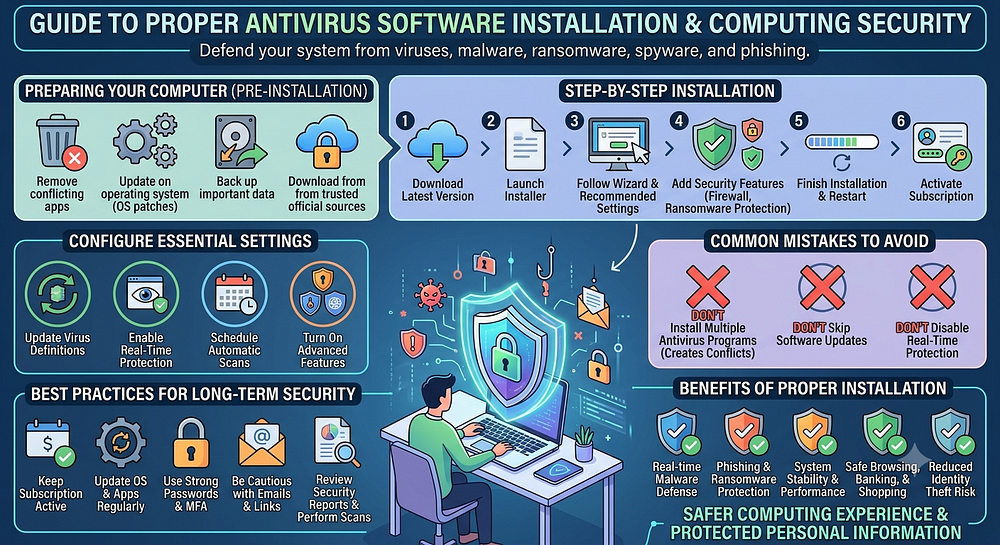
Remove Existing Antivirus Software
Before installing a new antivirus program, check whether another security application is already installed. Running multiple antivirus programs at the same time may create software conflicts, slow down your computer, and reduce protection. Remove any previous antivirus software before proceeding.
Update Your Operating System
Install the latest updates for Windows or macOS. Updated operating systems contain important security patches and improve compatibility with modern antivirus applications.
Back Up Important Data
Although antivirus installation is generally safe, creating a backup of important files is always recommended. This precaution protects valuable documents, photos, and personal data in case unexpected problems occur.
Download from Trusted Sources
Always download antivirus software directly from the official website of the software provider. Avoid downloading installers from unknown websites or unofficial sources that may distribute unsafe or modified files.
Step-by-Step Antivirus Installation Guide
Download the Latest Version
Visit the official antivirus website and download the newest version compatible with your operating system.
Launch the Installer
Locate the downloaded installation file and open it. If prompted, allow administrator permissions so the software can install correctly.
Follow the Installation Wizard
Carefully read the on-screen instructions and review the license agreement. Most users should choose the recommended installation settings for the best balance of protection and performance.
Install Additional Security Features
Many antivirus programs include browser protection, phishing filters, ransomware protection, secure web browsing, firewall integration, and password management tools. Installing these features provides more complete protection.
Finish Installation
Allow the installation process to complete without interruption. Depending on your computer and internet connection, installation may take several minutes.
Restart Your Computer
Some antivirus applications require a system restart before all security services become active. Restarting ensures every protection module loads properly.
Activate Your Subscription
If your antivirus requires activation, sign in to your account and enter your activation code or subscription details. This enables automatic updates and premium security features.
Configure Essential Security Settings
Installing antivirus software is only the first step. Proper configuration ensures maximum protection.
Update Virus Definitions
Immediately update the virus database after installation. New malware appears every day, and updated definitions allow your antivirus to detect the latest threats.
Enable Real-Time Protection
Real-time protection continuously monitors your system, checking files, downloads, applications, and internet activity for suspicious behavior. This feature should always remain enabled.
Schedule Automatic Scans
Configure automatic scans to run weekly or during times when your computer is not heavily used. Regular scans help identify hidden malware that may have escaped immediate detection.
Enable Automatic Updates
Automatic software updates ensure your antivirus continues receiving the latest security improvements and malware detection capabilities.
Turn On Advanced Protection
If available, enable firewall management, ransomware protection, secure browsing, email scanning, webcam protection, and phishing detection to strengthen overall security.
Common Mistakes to Avoid
Many users accidentally reduce their protection by making avoidable mistakes during installation.
One common mistake is installing more than one antivirus application. Multiple antivirus programs often interfere with each other and may reduce system performance.
Another mistake is skipping software updates after installation. Even newly downloaded antivirus software may require updated malware definitions before providing complete protection.
Disabling real-time protection to improve computer speed is another frequent error. While it may slightly reduce resource usage, it also removes continuous monitoring against online threats.
Downloading antivirus software from unofficial websites, ignoring security alerts, or allowing subscriptions to expire can also increase your exposure to cyber threats.
Avoiding these mistakes helps maintain stronger and more reliable protection.
Best Practices for Long-Term Security
Installing antivirus software is only part of maintaining a secure computer. Long-term protection requires ongoing attention and responsible online behavior.
Keep your antivirus subscription active and install updates whenever they become available. Review security reports generated by your antivirus and perform occasional manual full-system scans in addition to scheduled scans.
Avoid downloading software from untrusted websites and be cautious when opening email attachments or clicking unfamiliar links. Use strong passwords for your online accounts and enable multi-factor authentication whenever possible.
Regularly updating your operating system, web browser, and installed applications further reduces security vulnerabilities that cybercriminals may attempt to exploit.
Combining these habits with properly installed antivirus software creates a strong defense against modern online threats.
Benefits of Proper Antivirus Installation
Correctly installed antivirus software provides several important advantages:
Real-time protection against viruses and malware.
Detection of ransomware and phishing attempts.
Improved system stability and performance.
Automatic security updates.
Protection while browsing the internet.
Safer online banking and shopping.
Reduced risk of identity theft.
Greater peace of mind while using your computer.
These benefits make antivirus software an essential component of a comprehensive cybersecurity strategy.
Frequently Asked Questions (FAQs)
Can I install antivirus software on multiple devices?
Many antivirus subscriptions support multiple devices, but the exact number depends on your chosen plan.
Is free antivirus software enough?
Free antivirus software offers basic protection, but paid versions often include additional features such as ransomware defense, firewall management, identity protection, and secure browsing.
Should I restart my computer after installation?
Yes. If prompted, restarting your computer ensures that all antivirus services initialize correctly.
How often should I update antivirus software?
Automatic updates should remain enabled. Most antivirus programs check for new updates several times each day.
Can antivirus software slow down my computer?
Modern antivirus software is designed to minimize performance impact. Running only one antivirus program and keeping it updated helps maintain optimal system performance.
Conclusion
Properly installing antivirus software is one of the most effective ways to protect your computer from viruses, malware, ransomware, spyware, and other online threats. Preparing your device before installation, using trusted software, enabling essential security features, and keeping everything updated significantly improves your overall cybersecurity.
Regular system scans, responsible internet usage, strong passwords, and timely software updates further strengthen your protection. By following these best practices, you can enjoy a safer computing experience, safeguard your personal information, and keep your computer performing efficiently for years to come.


Comments
Post a Comment