Why Is My Antivirus Not Updating?
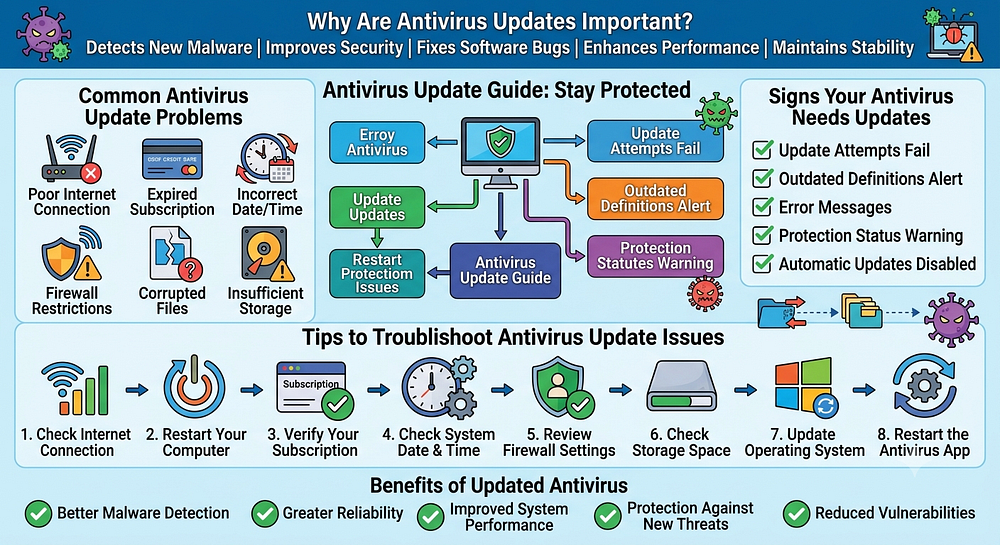
Antivirus software plays a vital role in protecting computers from viruses, malware, ransomware, spyware, and other online threats. One of its most important functions is receiving regular updates. These updates contain the latest virus definitions, security improvements, and performance enhancements that allow the antivirus program to recognize and defend against newly discovered threats.
When your antivirus stops updating, your computer may become vulnerable to emerging security risks. Even if the software appears to be running normally, outdated virus definitions can reduce its ability to detect the latest malware. Fortunately, antivirus update problems are often caused by common issues such as internet connectivity, software conflicts, expired subscriptions, or system configuration errors.
Why Are Antivirus Updates Important?
Antivirus programs rely on frequent updates to stay effective against constantly evolving cyber threats.
Regular updates help:
Detect newly discovered malware.
Improve security protection.
Fix software bugs.
Enhance program performance.
Improve system compatibility.
Strengthen threat detection.
Maintain overall software stability.
Without updates, even the best antivirus software can become less effective.
Common Reasons Your Antivirus Is Not Updating
Several factors can prevent antivirus software from downloading and installing updates.
Some common causes include:
Poor internet connectivity.
Expired antivirus subscription.
Incorrect system date and time.
Firewall restrictions.
Corrupted antivirus files.
Insufficient storage space.
Outdated operating system.
Software conflicts.
Temporary server issues.
Background process errors.
Identifying the underlying cause makes troubleshooting much easier.
Signs Your Antivirus Is Not Updating
Your antivirus program may display several warning signs when updates fail.
Common symptoms include:
Update attempts fail repeatedly.
Virus definitions remain outdated.
Error messages appear during updates.
Security alerts recommend updating.
Protection status shows outdated.
Automatic updates stop working.
The application becomes slow or unresponsive.
Recognizing these symptoms early helps prevent security risks.
Check Your Internet Connection
An active internet connection is required for downloading antivirus updates.
Verify that:
Your internet connection is working.
Websites load normally.
Network interruptions are not occurring.
The connection remains stable.
If the connection is unstable, updates may fail or stop midway.
Restart Your Computer
Temporary software issues can interfere with antivirus updates.
Restarting your computer helps:
Refresh system resources.
Restart background services.
Clear temporary glitches.
Restore normal software communication.
A simple restart often resolves minor update problems.
Verify Your Antivirus Subscription
Many antivirus programs require an active subscription to receive updates.
Check whether:
Your subscription is still active.
The license has expired.
Renewal is required.
Account information is current.
If the subscription has expired, update services may no longer be available.
Check the System Date and Time
Incorrect system date and time settings can interfere with secure communication between the antivirus application and its update servers.
Verify that:
The date is correct.
The time is accurate.
The time zone is properly configured.
Correct system settings help ensure successful updates.
Review Firewall Settings
Firewalls are designed to protect your computer, but they can sometimes prevent antivirus software from accessing update servers.
Review firewall settings to ensure the antivirus application is allowed to communicate through the network.
Proper firewall configuration supports successful updates while maintaining system security.
Check Available Storage Space
Antivirus updates require sufficient storage space.
If your device is running low on available storage, updates may fail to download or install properly.
Removing unnecessary files can provide enough space for successful updates.
Update Your Operating System
An outdated operating system may create compatibility issues with antivirus software.
Installing operating system updates helps:
Improve compatibility.
Enhance security.
Resolve software conflicts.
Improve system performance.
Keeping your operating system current supports reliable antivirus functionality.
Restart the Antivirus Application
Sometimes the antivirus application itself may experience temporary issues.
Closing and reopening the program refreshes its internal processes and may restore normal update functionality.
This simple step is often overlooked but can be surprisingly effective.
Check for Software Conflicts
Other security applications installed on your computer may interfere with antivirus updates.
Conflicts may occur between:
Multiple antivirus programs.
Security utilities.
Firewall applications.
System optimization software.
Running multiple security applications simultaneously can sometimes cause update failures.
Repair or Reinstall the Antivirus Program
If update problems continue, the antivirus installation itself may have become corrupted.
Repairing or reinstalling the application can restore:
Missing program files.
Damaged components.
Update functionality.
Overall software stability.
A fresh installation often resolves persistent update issues.
Wait and Try Again Later
Occasionally, antivirus updates may fail because the company's update servers are temporarily unavailable.
These interruptions are usually short-lived.
Waiting for a while and attempting the update again may resolve the issue without further troubleshooting.
Common Mistakes to Avoid
Many users unintentionally make update problems worse.
Avoid these common mistakes:
Ignoring update notifications.
Using expired antivirus licenses.
Running multiple antivirus programs.
Disabling security features unnecessarily.
Skipping operating system updates.
Interrupting update installations.
Following proper maintenance practices helps avoid unnecessary issues.
Tips to Prevent Future Antivirus Update Problems
Regular maintenance helps keep antivirus software functioning properly.
Helpful recommendations include:
Maintain a stable internet connection.
Keep your subscription active.
Install operating system updates regularly.
Monitor available storage space.
Restart your computer periodically.
Allow automatic updates whenever possible.
Review security settings occasionally.
These habits help ensure consistent protection.
Benefits of Keeping Your Antivirus Updated
Updated antivirus software provides many important advantages.
These include:
Better malware detection.
Improved system security.
Enhanced performance.
Protection against new threats.
Greater software reliability.
Reduced security vulnerabilities.
Regular updates are essential for maintaining effective protection.
Understanding Automatic Antivirus Updates
Most modern antivirus applications are designed to update automatically.
Automatic updates help:
Install new virus definitions.
Improve software functionality.
Maintain security without user intervention.
Reduce the risk of outdated protection.
Allowing automatic updates is one of the best ways to keep your computer secure.
FAQs
Why is my antivirus failing to update?
Common causes include poor internet connectivity, expired subscriptions, outdated operating systems, firewall restrictions, software conflicts, or corrupted program files.
Can an expired subscription stop antivirus updates?
Yes. Many antivirus programs require an active subscription before they allow new security updates to be downloaded.
Why is a stable internet connection important?
Antivirus software must connect to update servers to download the latest virus definitions and security improvements.
Can incorrect system time affect antivirus updates?
Yes. Incorrect date and time settings can interfere with secure communication between the antivirus application and update servers.
Should I reinstall my antivirus if updates keep failing?
If other troubleshooting methods do not work, reinstalling the antivirus program can often resolve corrupted installation files and restore update functionality.
Conclusion
Antivirus updates are essential for protecting your computer against the latest viruses, malware, ransomware, and other online threats. When updates stop working, your device may become increasingly vulnerable to new security risks.
Fortunately, most update problems can be resolved by checking your internet connection, verifying your subscription, reviewing firewall settings, updating your operating system, ensuring sufficient storage space, and repairing the antivirus installation if necessary. Regular maintenance and allowing automatic updates can help keep your antivirus software current and your computer secure.


Comments
Post a Comment