What Should You Do If Your Antivirus Scan Stops Working?
Introduction
Antivirus software plays a vital role in protecting computers, laptops, and other digital devices from viruses, malware, ransomware, spyware, phishing attacks, and other online threats. One of its most important features is the ability to perform regular scans that detect and remove harmful files before they can compromise your system. However, users sometimes encounter situations where the antivirus scan refuses to start, becomes stuck at a certain percentage, crashes unexpectedly, or fails to complete.
A non-functioning antivirus scan can leave your device vulnerable to security risks, making it important to identify and resolve the issue promptly. Fortunately, most antivirus scanning problems are caused by software conflicts, outdated definitions, incorrect settings, or temporary system errors rather than serious hardware failures.
This guide explains the common reasons why antivirus scans stop working, practical troubleshooting methods, and preventive tips to help maintain reliable protection for your device.
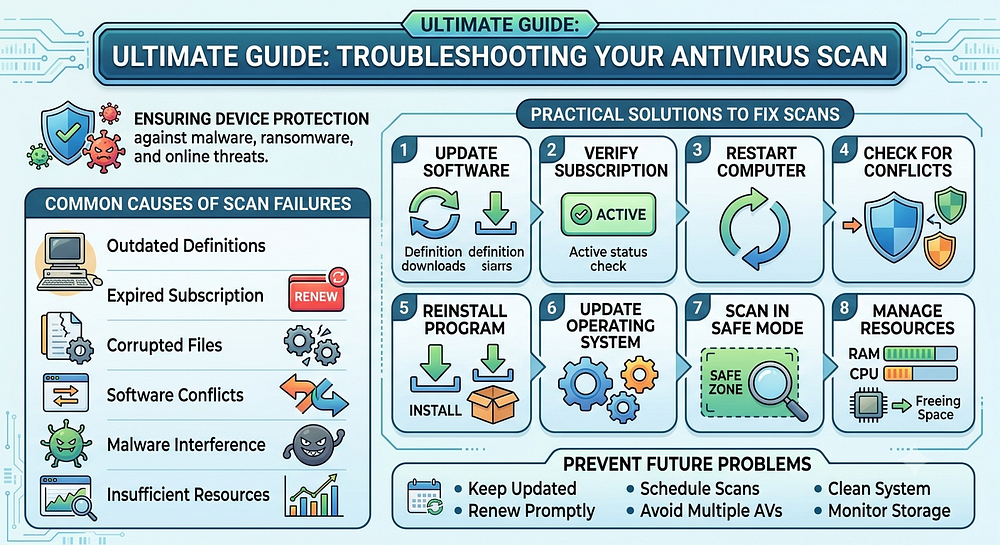
Why Does an Antivirus Scan Stop Working?
There are several reasons an antivirus scan may fail or become unresponsive. Understanding these causes makes it easier to find the right solution.
Some of the most common reasons include:
Outdated antivirus software
Expired subscription or license
Corrupted installation files
Software conflicts with another antivirus program
Malware interfering with the antivirus
Insufficient system resources
Corrupted operating system files
Interrupted software updates
Damaged hard drive sectors
Incorrect scan settings
Most of these issues can be resolved without replacing your antivirus software.
Update Your Antivirus Software
One of the first things to check is whether your antivirus software is fully updated.
Modern antivirus programs rely on frequently updated virus definitions to recognize newly discovered threats. If the software has not been updated recently, scans may fail to start or may not detect current malware effectively.
Regular updates usually include:
New virus signatures
Performance improvements
Security enhancements
Improved compatibility with operating system updates
Keeping your antivirus software current helps ensure reliable scanning performance.
Verify Your Subscription Status
Many antivirus applications require an active subscription to provide full functionality.
If your subscription has expired, you may notice:
Disabled scanning features
Missing security updates
Limited malware protection
Inactive real-time protection
Scan failures
Checking your account status ensures your security software remains fully operational.
Restart Your Computer
Temporary software glitches often disappear after restarting the computer.
Restarting helps:
Refresh system memory
Restart antivirus services
Remove temporary conflicts
Restore communication between Windows and the antivirus application
Before attempting more advanced troubleshooting, a simple restart is always worth trying.
Check for Multiple Antivirus Programs
Installing more than one antivirus program can create conflicts because each application attempts to monitor files and system activity simultaneously.
These conflicts may cause:
Scans freezing midway
Extremely slow performance
Frequent crashes
Incomplete scans
System instability
Using one trusted antivirus solution at a time helps avoid compatibility problems.
Reinstall the Antivirus Program
Corrupted installation files may prevent your antivirus software from functioning correctly.
This can occur due to:
Interrupted updates
Failed installations
System crashes
File corruption
Reinstalling the antivirus program replaces damaged files, restores default settings, and often resolves persistent scanning issues.
Update the Operating System
Operating system updates improve compatibility between Windows and security software.
Running outdated system software may lead to:
Application crashes
Driver conflicts
Missing security components
Communication errors
Installing the latest Windows updates helps ensure your antivirus software works correctly.
Scan for Malware in Safe Mode
Some advanced malware attempts to disable antivirus software to avoid detection.
Possible symptoms include:
Antivirus closing unexpectedly
Scan button not responding
Security software disappearing
Updates failing repeatedly
Starting the computer in Safe Mode may allow the antivirus to run without interference from malicious software.
If your antivirus supports boot-time or offline scanning, using these features may help detect difficult threats.
Check Available System Resources
Antivirus scans require sufficient processing power, memory, and storage.
Running multiple demanding applications at the same time can reduce available resources.
To improve performance:
Close unnecessary applications.
Pause large downloads.
Save your work before starting a full system scan.
Ensure adequate free disk space.
Giving the antivirus access to system resources helps scans complete more efficiently.
Repair Hard Drive Errors
Damaged files or hard drive errors can interrupt the scanning process.
Symptoms may include:
Scan freezing at the same percentage
File read errors
Slow file access
Unexpected application crashes
Running your operating system's disk repair tools can identify and fix file system issues that interfere with antivirus scans.
Review Antivirus Settings
Incorrect configuration settings can also prevent scans from working.
Review settings such as:
Scheduled scans
Scan exclusions
Detection levels
Real-time protection
Automatic updates
Restoring default settings may resolve problems caused by accidental configuration changes.
Check Internet Connectivity
Many modern antivirus programs depend on internet access for:
Downloading virus definitions
Cloud-based threat analysis
License verification
Security database synchronization
An unstable internet connection may prevent updates or interfere with cloud-assisted scanning features.
Ensuring a reliable connection improves antivirus performance.
Keep Your Computer Clean and Optimized
Routine maintenance contributes to better antivirus performance.
Helpful maintenance practices include:
Removing unnecessary software
Cleaning temporary files
Keeping sufficient free storage space
Updating device drivers
Restarting the computer regularly
Installing operating system updates
A well-maintained computer allows antivirus software to run more efficiently.
Prevent Future Antivirus Scan Problems
You can reduce the chances of future scanning issues by following these best practices:
Update antivirus software regularly.
Renew subscriptions before they expire.
Avoid installing multiple antivirus programs.
Schedule automatic system scans.
Keep Windows fully updated.
Download software only from trusted sources.
Monitor storage space.
Restart your computer periodically.
Perform regular full system scans.
Review antivirus settings after major updates.
Following these practices helps maintain consistent protection against evolving cyber threats.
When Should You Seek Additional Help?
If your antivirus scan continues to fail after trying basic troubleshooting steps, further assistance may be necessary.
Persistent problems may indicate:
Severe malware infections
Corrupted operating system files
Hardware-related storage issues
Software compatibility problems
Damaged antivirus installations
In these situations, reviewing official support documentation or consulting qualified technical support can help identify the underlying cause and restore normal functionality.
Conclusion
A non-working antivirus scan can leave your computer exposed to viruses, malware, and other online threats, making it important to address the issue quickly. Fortunately, most scanning problems result from outdated software, expired subscriptions, corrupted installations, system conflicts, or temporary software errors rather than permanent hardware failures.
By keeping your antivirus software updated, maintaining an active subscription, avoiding multiple antivirus installations, checking system resources, updating Windows, and performing regular computer maintenance, you can significantly reduce the likelihood of scan failures. Taking these preventive measures ensures your antivirus software continues to provide dependable protection and helps keep your computer secure against constantly evolving cyber threats.


Comments
Post a Comment