How Can You Fix Outlook Emails That Won't Send?
Introduction
Microsoft Outlook is one of the most popular email applications used by individuals, businesses, and organizations worldwide. It offers powerful features for sending emails, managing calendars, organizing contacts, and scheduling meetings. Despite its reliability, users occasionally experience a common issue where Outlook emails remain stuck in the Outbox or fail to send altogether.
When Outlook messages do not send successfully, it can disrupt personal communication, delay important business conversations, and create unnecessary frustration. The problem may occur due to internet connectivity issues, incorrect account settings, oversized attachments, corrupted Outlook data files, server problems, or software conflicts.
Fortunately, most Outlook sending issues can be resolved without advanced technical knowledge. This guide explains the common reasons Outlook messages fail to send, practical troubleshooting steps, and preventive measures to help ensure smooth and reliable email communication.
Why Are Outlook Emails Not Sending?
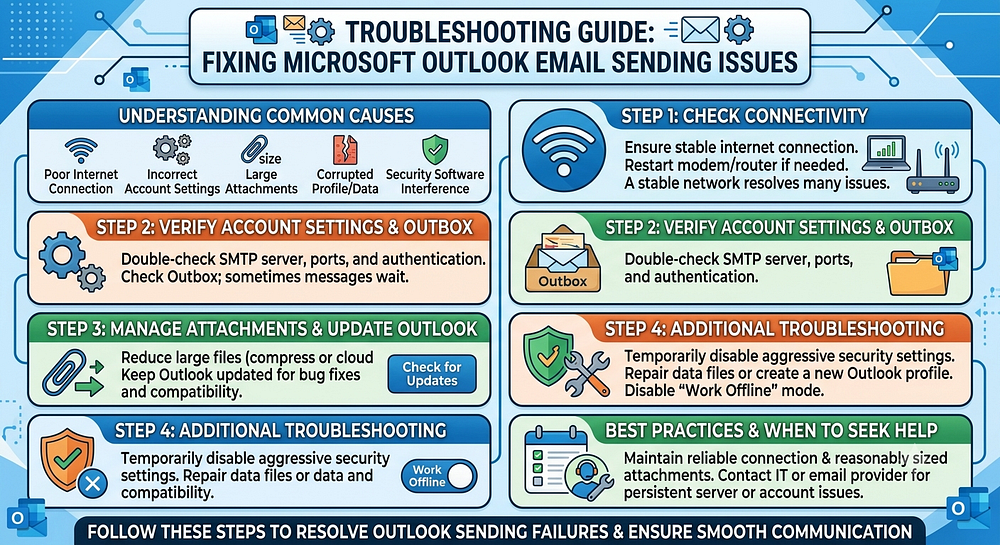
Several factors can prevent Outlook from sending emails successfully. Understanding these causes helps identify the appropriate solution.
Some of the most common reasons include:
Poor or unstable internet connection
Incorrect Outlook account settings
Large email attachments
Messages stuck in the Outbox
Corrupted Outlook profile
Damaged Outlook data files
Authentication problems
Antivirus or firewall interference
Outdated Outlook application
Temporary mail server issues
Most of these problems can be resolved using simple troubleshooting techniques.
Check Your Internet Connection
A stable internet connection is essential for sending emails through Outlook.
If your internet connection becomes unstable, Outlook may fail to connect to the mail server, causing messages to remain in the Outbox.
To verify connectivity:
Open several websites.
Restart your modem or router.
Reconnect to your Wi-Fi network.
Try a wired connection if available.
Restart your computer.
A stable network often resolves temporary email delivery issues.
Verify Outlook Account Settings
Incorrect email account settings are one of the leading causes of sending failures.
Review the following settings carefully:
Email address
Incoming server information
Outgoing SMTP server
Port numbers
Authentication settings
Encryption methods
Even a minor configuration error can prevent Outlook from sending emails properly.
Check the Outbox
Sometimes Outlook successfully creates the email but cannot deliver it immediately.
Messages may remain in the Outbox because of:
Connection interruptions
Attachment problems
Temporary server issues
Outlook synchronization errors
Open the Outbox and check whether messages are waiting to be sent. Restarting Outlook or clicking Send/Receive may successfully deliver pending emails.
Reduce Large Attachments
Large attachments frequently delay or prevent email delivery.
Many email providers limit attachment sizes.
Oversized files may cause:
Delivery failures
Slow uploads
Timeout errors
Server rejection
If necessary:
Compress large files.
Remove unnecessary attachments.
Share files using cloud storage services when appropriate.
Smaller messages generally send much faster.
Restart Outlook
Temporary software glitches sometimes prevent Outlook from functioning correctly.
Restarting Outlook can:
Refresh server connections
Restart synchronization
Clear temporary memory
Resolve minor software issues
If restarting Outlook does not help, restart your computer before trying again.
Update Microsoft Outlook
Running an outdated version of Outlook may cause compatibility problems with modern email servers.
Regular updates provide:
Bug fixes
Performance improvements
Security patches
Better compatibility
Enhanced stability
Installing updates ensures Outlook continues working efficiently.
Check Antivirus and Firewall Settings
Security software occasionally interferes with Outlook's ability to send emails.
Certain firewall or antivirus settings may block:
SMTP connections
Email synchronization
Secure authentication
Server communication
Review your security software settings to ensure Outlook is allowed to communicate with the mail server.
Repair Outlook Data Files
Corrupted Outlook data files can prevent email delivery.
Common symptoms include:
Emails remaining in the Outbox
Outlook freezing
Synchronization failures
Unexpected error messages
Using Outlook's built-in repair tools can help restore damaged data files and improve application stability.
Create a New Outlook Profile
If your Outlook profile becomes corrupted, sending emails may fail repeatedly.
Signs of profile corruption include:
Login issues
Missing folders
Repeated synchronization errors
Send and receive failures
Creating a new Outlook profile often resolves persistent account-related problems without affecting the email account itself.
Verify Mail Server Availability
Sometimes Outlook is working correctly, but the email provider's servers are temporarily unavailable.
Possible reasons include:
Scheduled maintenance
Network outages
Heavy server traffic
Security updates
Waiting for the server to become available may restore normal email functionality.
Disable Offline Mode
Outlook includes a Work Offline feature that prevents communication with the mail server.
If Offline Mode is enabled:
Emails remain in the Outbox.
New messages cannot be downloaded.
Synchronization stops.
Ensure Outlook is connected online before attempting to send messages.
Review Authentication Settings
Modern email providers require secure authentication.
Incorrect authentication settings may result in:
Login failures
SMTP authentication errors
Password prompts
Message delivery failures
Verify that your account credentials remain accurate and up to date.
Keep Windows Updated
Windows updates frequently include improvements that enhance Outlook's performance.
Updates often contain:
Network improvements
Security patches
Compatibility fixes
Stability enhancements
Keeping Windows updated helps reduce software-related email issues.
Best Practices to Prevent Outlook Sending Problems
To minimize future email delivery issues:
Keep Outlook updated.
Install Windows updates regularly.
Maintain a reliable internet connection.
Keep attachments reasonably sized.
Review account settings periodically.
Back up Outlook data files.
Avoid unnecessary Outlook add-ins.
Monitor available mailbox storage.
Restart Outlook occasionally.
Protect your account with strong passwords.
Following these practices improves Outlook's reliability and reduces interruptions.
When Should You Seek Additional Help?
If Outlook continues failing to send emails after basic troubleshooting, additional assistance may be necessary.
Persistent problems may indicate:
Corrupted Outlook installation
Damaged mailbox data
Advanced server configuration issues
Account authentication problems
Network-related restrictions
Reviewing official Microsoft documentation or contacting your email provider or IT administrator can help diagnose more complex issues.
Conclusion
Outlook messages may fail to send for several reasons, including internet connectivity issues, incorrect account settings, oversized attachments, corrupted profiles, outdated software, or temporary server problems. Fortunately, most sending errors can be resolved through simple troubleshooting steps such as checking your internet connection, reviewing Outlook settings, updating the application, repairing data files, and ensuring Outlook is operating online.
Regular maintenance, timely updates, and careful account management can help prevent future sending issues and ensure smooth email communication. By understanding the common causes behind Outlook message delivery failures and following the recommended solutions, you can keep Outlook functioning reliably and avoid unnecessary interruptions in your personal or professional communications.


Comments
Post a Comment